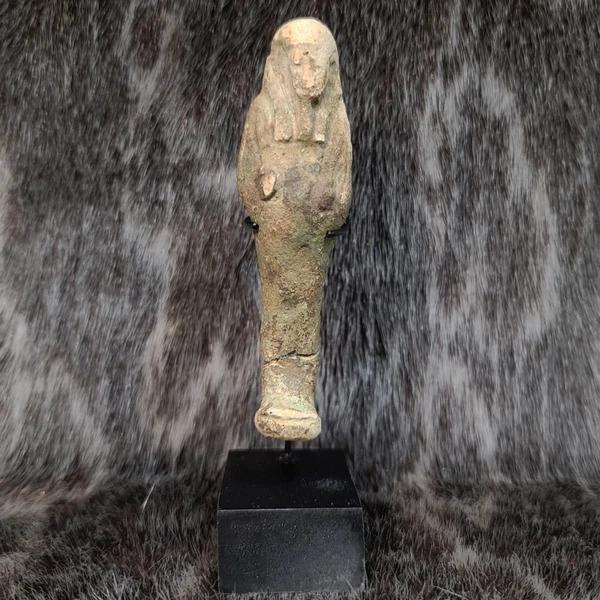
Ancient Egyptian Faience Ushabti (625 - 300 BCE)
Historical context
Late Period Egypt- Culture
- Ancient Egypt
- Type
- Ushabti figurine
- Material
- Faience
- Dated
- 625 BCE – 300 BCE
Ushabti figurines were placed in tombs to serve the deceased in the afterlife, answering the call to perform agricultural labor on their behalf in the netherworld.
Catalog details
This is an authentic Ancient Egyptian faience ushabti. It dates back to the Late Period (625 to 300 BCE) and was acquired from an American antiquity collection.
When an Ancient Egyptian died, they did not casually go off to a relaxing paradise. They believed their existence of servitude simply transitioned from one set of Gods to another.
Produced in great numbers, these ushabti figurines would be called upon by the deceased in their afterlife and would ease the individual's netherworldly workload.
Ushabti are evoked in this inscription from the book of the dead:
"Illuminate the Osiris [name of the deceased], whose word is truth. Hail, Shabti Figure! If the Osiris [name of the deceased] be decreed to do any of the work which is to be done in Khert-Neter, let everything which standeth in the way be removed from him - whether it be to plough the fields, or to fill the channels with water, or to carry sand from the East to the West. The Shabti Figure replieth: "I will do it, verily I am here when thou callest".
Contemporary world
Major events happening around the time this piece was made.